
Planting Through the Seasons: The Ultimate Year-Round Gardening Guide
Understanding when to plant throughout the year is one of the biggest factors in gardening success. Whether you’re growing in raised garden beds or working with a smaller space, each season brings its own unique opportunities and challenges. Timing isn’t just helpful — it’s everything.
From the fresh, hopeful growth of spring to the quiet planning phase of winter, knowing what to expect from each season can help you grow healthier plants, maximise your yields, and avoid the most common gardening mistakes. Below, you’ll find practical guidance to help you garden smarter all year round.
🌱 Why Seasonal Planting Matters
Gardening isn’t just about planting seeds and hoping for the best — it’s about timing. Each season fundamentally affects soil temperature, sunlight hours, moisture levels, and plant growth cycles. Get the timing right and everything seems to fall into place. Get it wrong and even the most enthusiastic effort can lead to disappointment.
Plants evolved over millions of years to respond to environmental cues. Day length triggers flowering. Soil temperature determines whether seeds will germinate or simply rot in the ground. Moisture levels influence how deeply roots will reach. When you understand these rhythms, you stop fighting nature and start working with it.
By aligning your planting schedule with the seasons, you give your plants the best possible conditions to thrive. This leads to stronger root systems, healthier foliage, fewer pest problems, and — most importantly — better harvests. Seasonal planting also reduces waste. Fewer failed sowings means less time, money, and effort lost to plants that never stood a chance.
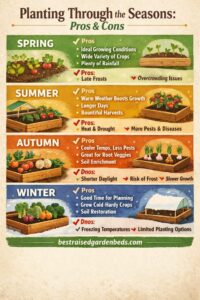
🌼 Spring: The Season of New Growth
Spring is when most gardeners feel the excitement return. There’s something almost magical about watching the soil warm up, daylight hours increase, and plants begin to shake off the stillness of winter. It’s a season of possibility.
It’s the perfect time to start sowing a wide variety of crops, particularly leafy greens, brassicas, and early vegetables like peas, spinach, lettuce, and radishes. In raised garden beds, the soil warms faster than it does in the ground, giving you a valuable head start over traditional in-ground growing.
However, spring isn’t without its hazards. Late frosts can still pose a real risk, especially in the UK where weather can be unpredictable well into April and sometimes May. Young seedlings are especially vulnerable, so it’s important to keep an eye on overnight temperatures and be prepared to cover plants with fleece or cloches when needed.
Spring is also the time to get your soil in order. If you didn’t add compost in autumn, do it now before planting begins. Top up raised beds, break up any compacted areas, and check your drainage. A few hours of preparation in early spring can make the entire growing season more productive.
☀️ Summer: Peak Growing Season
Summer is when the garden truly comes alive. With longer days, abundant sunlight, and warmer temperatures, plants grow quickly and crops begin to mature in satisfying succession. This is when you’ll enjoy the rewards of your earlier efforts — picking tomatoes, cucumbers, courgettes, beans, and herbs in abundance.
But summer also brings its own challenges. Watering becomes a daily responsibility, particularly during dry spells. Raised beds, while excellent for drainage and warmth, can dry out faster than ground-level plots, so checking moisture levels regularly is essential. Mulching around your plants helps retain moisture, suppress weeds, and keep roots cool during heat waves.
Pest pressure also peaks in summer. Aphids, slugs, caterpillars, and whitefly all make their presence felt during the warmer months. Regular inspection of your plants — particularly the undersides of leaves — allows you to spot problems early before they escalate. Where possible, encourage natural predators like ladybirds and lacewings by planting companion flowers such as marigolds and nasturtiums.
Summer is also the time to succession sow. Rather than planting everything at once, stagger your sowings every two to three weeks to ensure a continuous harvest rather than a single glut.
🍂 Autumn: The Underrated Season
Autumn is often overlooked by beginner gardeners, but experienced growers know it’s one of the most rewarding times to be in the garden. The soil retains the warmth built up over summer, which helps roots establish quickly, while the cooler air reduces stress on newly planted crops. It’s a surprisingly gentle time to grow.
Autumn is ideal for planting garlic, onion sets, and a range of hardy winter greens including kale, chard, and spinach. Root vegetables such as parsnips and carrots can also be left in the ground through autumn and harvested as needed — in fact, a touch of frost can actually improve their flavour by converting starches to sugar.
Beyond planting, autumn is the perfect time to invest in your soil. Adding generous amounts of well-rotted compost or manure now means it will have the whole winter to break down and integrate, leaving you with beautifully fertile beds come spring. Clear away spent crops promptly to reduce the risk of disease overwintering in your beds.
In raised garden beds, autumn is also a good time to inspect the structure itself. Check for any wear, rot, or instability, and make repairs before the harder conditions of winter set in.
❄️ Winter: Plan and Prepare
While winter may appear to be a quiet time in the garden, it’s actually crucial for long-term success. This is when thoughtful gardeners do their most valuable work — not necessarily outdoors, but in planning, preparing, and setting the foundation for everything that follows.
Use winter to review what worked well in the previous year and what didn’t. Order seeds early from reputable suppliers, as popular varieties often sell out. Plan your crop rotation to avoid depleting the same nutrients from the same beds year after year, and to reduce the build-up of soil-borne pests and diseases.
Some hardy crops — such as winter lettuces, broad beans sown in November, and overwintering onions — can still grow with the protection of a cold frame or cloche. If you have a greenhouse or polytunnel, you can extend your growing season considerably.
For most gardeners, though, winter is about rest and readiness. Clear, organise, maintain your tools, and sharpen your plans. The garden rewards preparation.
🌿 Final Thoughts
Gardening success comes down to understanding the rhythm of the seasons. Each one has its own personality, its own demands, and its own rewards. By working with nature rather than against it, you can create a thriving, productive garden all year round — not just during the obvious growing months.
If you’re just getting started or looking to improve your setup, raised garden beds can make seasonal planting significantly easier and more effective, offering better drainage, warmer soil, and fewer weeds in every season.
👉 For more tips, guides, and inspiration, visit: bestraisedgardenbeds.com